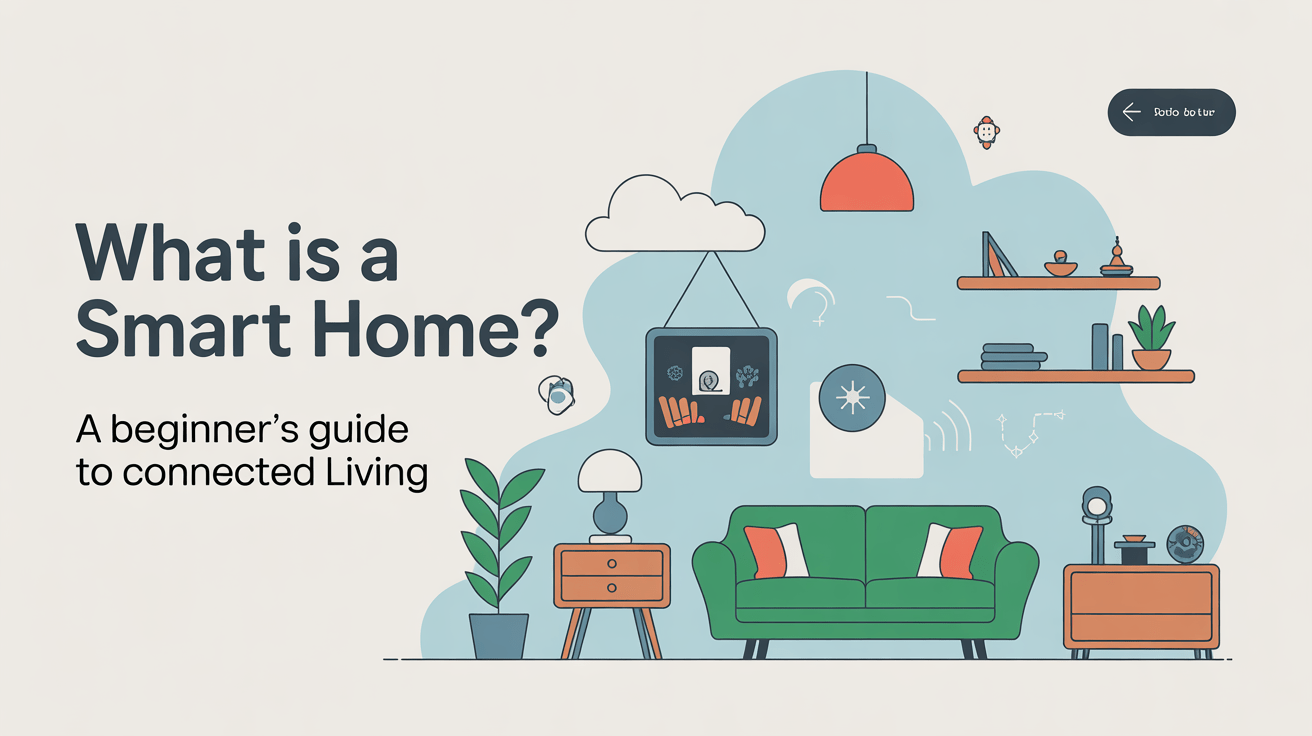
What Is a Smart Home? A Beginner’s Guide to Connected Living
In the modern technological landscape, the notion of a smart home transcends mere novelty. It represents an ecosystem where intelligent devices coalesce to provide seamless automation, efficiency, and enhanced quality of life. For developers, engineers, investors, and researchers alike, understanding the deep architecture, protocols, and practical implications of smart home technology is critical as it reshapes residential environments globally.
Defining a Smart Home: Beyond the Buzzword
The term “smart home” is frequently enough used loosely, but at its core, it refers to a residence equipped with an interconnected system of devices and sensors that communicate through networks to automate and manage household functions. Unlike traditional home automation that relies on isolated programmable appliances, a smart home leverages real-time data exchange, machine learning, and remote connectivity, fostering an adaptive environment.
Consider a home where lighting adjusts dynamically based on occupant presence or ambient daylight, HVAC systems learn from user preferences and weather forecasts to optimise energy usage, and security protocols respond instantly to anomalies detected by AI-powered cameras. This integration of intelligence with connectivity offers not just convenience but also a transformative shift in resource utilisation and safety.
Essential Components That Constitute a Smart Home
- Smart Devices: Network-enabled appliances and sensors such as smart thermostats, locks, lights, cameras, voice assistants, and environmental sensors.
- Centralized Hub or Controller: A platform or gateway managing communication between devices and facilitating user interactions, often via smartphone applications or voice commands.
- Communication Protocols: Standards like Wi-Fi, Zigbee, Z-Wave, Thread, and Bluetooth Low Energy (BLE) that enable heterogeneous devices to interoperate efficiently.
- Cloud or Local Processing: Data processing occurring either in the cloud or at the edge, enabling automation rules, AI-driven analytics, and device management.
While these elements appear straightforward, the real expertise lies in harmonising them within a secure, scalable infrastructure that evolves with user needs and technological advancements.
Interconnectivity Technologies and Protocols in Smart Homes
Understanding the underlying communication frameworks is essential for anyone designing or investing in smart home ecosystems. These protocols govern how devices discover one another, exchange data, and maintain persistent connections with minimal latency and power consumption.
Wi-Fi: the Backbone for High-Bandwidth Smart Devices
wi-Fi remains pervasive due to its high throughput, supporting bandwidth-intensive devices like smart TVs and security cameras. Though Wi-Fi’s relatively high power consumption and occasional network congestion can pose challenges in dense smart home environments.
Zigbee and Z-Wave: Mesh Networking for Low-Power Devices
Zigbee and Z-Wave are specialised wireless standards optimised for reliable,low-power communication among sensors and actuators. Their mesh network topology allows devices to relay messages, extending network range and resilience. Developers must be wary of interoperability nuances since manufacturers often incorporate proprietary extensions within these standards.
Thread: Designed for the Future of IPv6-Enabled Homes
Thread protocol leverages IPv6 and low-power mesh networking to provide scalable, secure, and self-healing connectivity. Its industry backing is growing, driven by commitments from the Connectivity Standards Alliance (CSA). Thread’s compatibility with IP makes it a robust option for developers aiming for future-proof architectures.
Bluetooth Low Energy (BLE): Ultra-Low Power, Short Range Control
BLE remains dominant for wearable integrations and local device pairing due to its minimal power draw. Though its limited range and point-to-point design restrict its applicability as the primary network in broad smart home systems.
Interoperability Challenges and Industry Efforts
One of the largest obstacles is the fragmentation stemming from competing standards and vendor lock-in. Initiatives like the Matter protocol (formerly Project Connected Home over IP) aim to unify these disparate technologies under a standardised, interoperable framework that fosters cross-device compatibility and security without sacrificing innovation.

Core Architecture of Smart Home Systems: A Framework for Connected Living
Designing a robust smart home system is an exercise in orchestrating distributed components and services while managing complexity, latency, and fault tolerance. At a high level, a typical smart home architecture integrates device layers, middleware, control logic, and user interaction interfaces.
Device Layer: Sensors, Actuators, and Edge Intelligence
This foundational layer comprises field devices such as motion detectors, thermostats, door locks, and cameras. Increasingly, these devices include microcontrollers capable of edge computing-processing data locally to reduce latency and bandwidth consumption while enhancing privacy.
Communication & Middleware Layer: Protocol Translation and Message Brokering
This intermediary layer ensures interoperability, translating diverse protocols into a unified format and managing asynchronous messaging queues frequently enough via MQTT or CoAP. It abstracts complexity, enabling scalable integration of new devices and services without extensive reconfiguration.
Control & Automation Engines: Rule-based and AI-driven Management
Control layers execute automation scripts or leverage machine learning to implement adaptive behaviours. Such as an AI model might predict occupancy patterns from sensor data, optimising heating schedules preemptively. The sophistication of these engines defines the intelligence quotient of a smart home.
User Interface and Remote Access layer
Users engage through multi-modal interfaces-mobile apps, voice assistants, web dashboards, or even augmented reality. Presenting intuitive feedback and granular control, these layers are essential for trust, acceptance, and ease of use.
Security and Privacy Architecture: A Cross-Cutting Concern
Data encryption, authentication protocols, and secure onboarding are embedded across all layers to thwart potential intrusions and data leaks. Designers must architect with zero-trust principles to mitigate risks arising from an increasingly exposed attack surface, both local and remote.
Smart Home Use Cases: Practical Applications Transforming Daily Life
The transformative power of connected living manifests in diverse scenarios that enhance convenience, sustainability, safety, and health monitoring. Exploring these use cases illuminates which technologies and design choices are pivotal for meaningful impact.
Energy Management: Smarter, Not Harder Energy Consumption
Smart meters and thermostats coordinate in real time with utility grids and weather forecasts to optimize power usage. Demand response capabilities allow residents to shift consumption to off-peak hours, reducing bills and grid strain. Integration with solar panels and battery storage elevates homes from passive consumers to active energy prosumers.
Security and Surveillance: Proactive Protection Through Intelligence
Motion sensors teamed with AI-powered video analytics provide immediate alerts on suspicious activities, reducing false alarms that have plagued traditional security setups. Smart locks with biometric or code access replace mechanical keys, adding convenience paired with audit trails.
Health and Wellness Monitoring
Connected sensors track air quality, humidity, and noise levels, maintaining optimal living conditions for vulnerable populations such as infants or seniors. Wearable integration can alert caregivers or the resident in emergencies, bringing healthcare further into the home.
Home Entertainment and Ambient Experience
Smart lighting and audio systems synchronise to create immersive atmospheres tailored to user preferences or content being consumed. These integrations provide subtle enhancements that turn homes into responsive and adaptive environments.
Allowing real-time decision-making without relying on static schedules – with amazing precision!
Security and Privacy in Smart Homes: Threat Models and Mitigation Strategies
As homes interlink more devices and cloud services, the attack surface broadens exponentially. Addressing vulnerabilities requires a profound understanding of threat models and the adoption of stringent safeguards spanning device integrity, data confidentiality, and identity management.
Common Vulnerabilities in Connected Living
- Weak Authentication: Default or reused passwords make devices easy entry points for attackers.
- Unencrypted Communication: Data intercepted over insecure protocols can reveal sensitive habits and personal information.
- Firmware Exploits: Infrequent or absent updates allow exploitation of known bugs.
- Cloud Dependency Risks: Users become vulnerable if cloud providers experience outages or breaches.
Best Practices for Robust Smart Home Security
- Zero-trust Architecture: Every interaction is authenticated and verified within and outside the home network.
- End-to-End Encryption: All data transmitted between devices and servers should be encrypted using strong cryptography like TLS 1.3.
- Regular Software Updates: Automatic patching mechanisms with secure signing ensure devices run trusted code.
- Segmentation of Networks: isolate IoT devices from critical computers and personal data networks.
- User Education: Inform users about privacy controls, secure device installation, and recognising anomalies.
Security KPI Insight: Studies indicate that over 70% of consumer smart home attacks originate from weak authentication and out-of-date firmware. Industry adoption of robust security frameworks considerably reduces these incidents (NIST Cybersecurity Framework).
Developer and Engineer Considerations for Building Smart Home Solutions
For practitioners intent on engineering next-generation smart home applications, technical challenges span hardware integration, software architecture, user experience, and beyond. Grappling with these details early ensures systems are reliable, scalable, and user-centric.
API Design and Ecosystem Integration
Open, well-documented APIs facilitate device interoperability and third-party innovation while reducing lock-ins. Emerging standards like Matter promise to unify fragmented approaches, but legacy devices require backward compatibility strategies.
Edge computing and Latency Optimization
Local processing reduces reliance on cloud latency and bandwidth, improving responsiveness and privacy. Developers must balance the resource constraints of edge devices with the sophistication of AI and automation logic.
Power Management and Sustainability
Battery-powered sensors and actuators require ultra-low power designs and intelligent sleep cycles. Furthermore, sustainability mandates consider manufacturing footprints and end-of-life device recycling.
Testing and Certification
Ensuring system resilience under real-world conditions necessitates automated testing frameworks, simulation of network failures, and adherence to certification programs like UL 2900 for cybersecurity and Energy Star for efficiency.
Market Trends and Future Outlook for Smart Homes
The smart home market is poised for exponential growth, driven by rising consumer demand, advancements in AI, and regulatory pushes for energy efficiency and security. Forecasts anticipate the market reaching over $150 billion by 2030, revealing vast opportunities for startups and established players alike.
Shift Toward Standardisation and Interoperability
Fragmentation remains a key barrier limiting adoption. The maturation of universal protocols and ecosystem partnerships promises to streamline product compatibility, reducing consumer friction.
AI and Predictive Automation: The Next Frontier
Machine learning models will increasingly anticipate needs based on behavioral data,weather,and context,moving homes from reactive automation to predictive intelligence.
Integration with Smart Cities and Grids
Smart homes will become nodes in larger smart infrastructure networks, enabling coordinated energy management, disaster response, and public safety measures-transforming from isolated units into collaborative urban assets.
Regulatory and Ethical Considerations
Privacy legislation such as GDPR and CCPA influences design choices. Ethical frameworks must ensure informed consent, data minimisation, and fair algorithmic decision-making within connected homes.
conclusion: empowering Developers and Investors to Shape Connected Living
Smart homes symbolise more than convenience; they are architectural and technological canvases where innovation meets daily human experience. By mastering the intricate interplay between devices, networks, security, and user expectations, technologists can pioneer systems that not only elevate lifestyles but also advance sustainability, safety, and well-being.
Investors should view the smart home space as a fertile ground for breakthroughs ranging from AI-enhanced automation to energy grid integration. Meanwhile, engineers and developers who prioritise security, interoperability, and human-centric design stand to deliver resilient ecosystems that foster long-term adoption and trust.
This guide invites professionals to dive deep beyond the surface – to engineer smart homes that truly anticipate and enrich connected living.