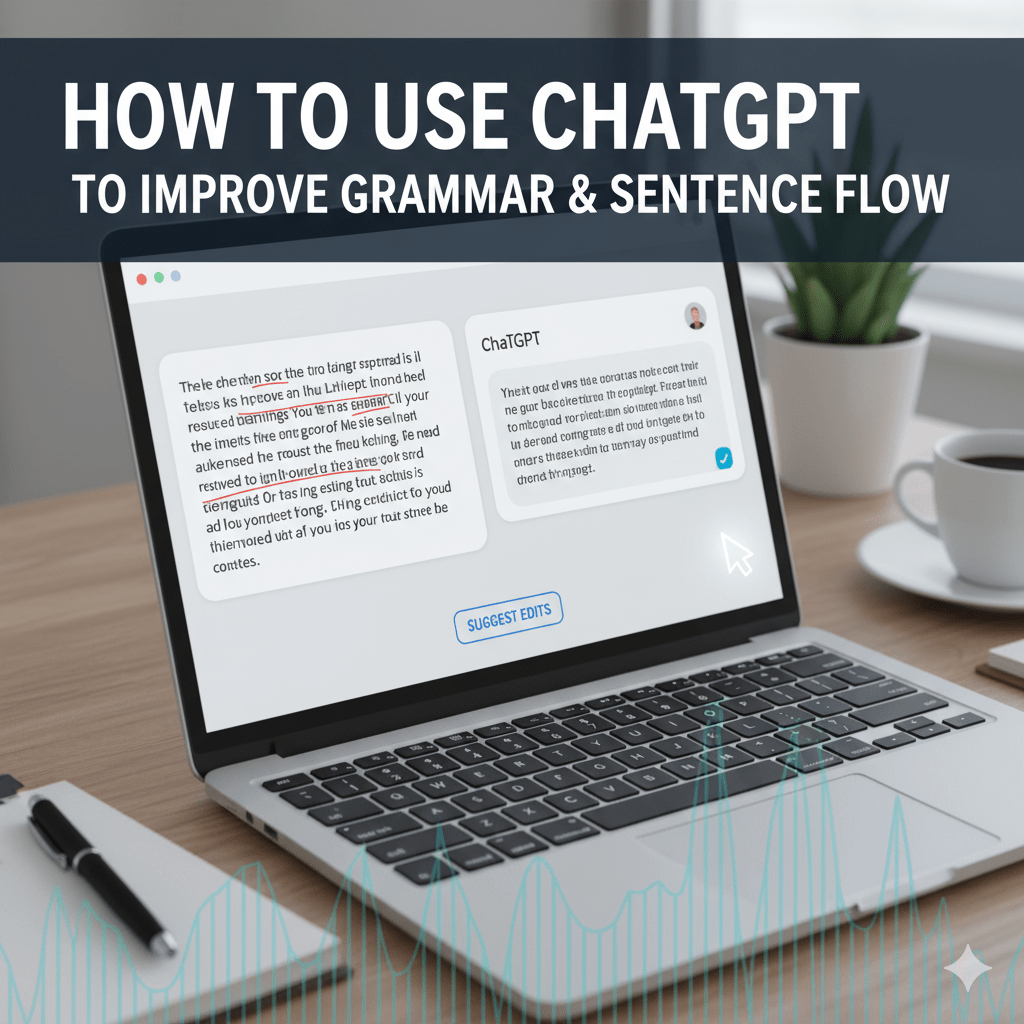
When developers, researchers, and founders strive to communicate clearly and effectively, mastering grammar and sentence flow emerges as a critical skill – yet one frequently enough relegated to secondary status in developing technical content or code documentation.The emergence of advanced AI language models like OpenAI’s ChatGPT has revolutionized how we approach these language challenges. In this comprehensive exploration,we dive deeply into how to harness ChatGPT specifically to enhance grammar and sentence flow,ensuring your text not only conveys meaning precisely but also resonates fluidly wiht your target audience.
Why Improving Grammar and Sentence Flow Matters in Technology Dialog
The Role of Clear Language in Tech Innovation
Tech disciplines-from software engineering to data science-rely heavily on clear, precise communication.Poor grammar or clunky sentence structure can obscure ideas,introduce ambiguity,and ultimately lead to misunderstandings in critical environments such as product specs,research publications,or investor pitches. Improving these textual qualities elevates credibility and efficiency in conveying complex concepts.
Common Grammar and Flow Challenges in Technical Writing
Technical writing often suffers from overly dense wording,passive constructions,inconsistent tense usage,and unbalanced sentence lengths. These factors impair readability and disrupt the natural narrative rhythm. Correcting these issues traditionally requires iterative human edits or expert copyediting,which is time-intensive and costly.
ChatGPT as a Strategic Language Ally
AI language models like ChatGPT excel at parsing language patterns and generating human-like text. They serve not only as grammar checkers but also as dynamic editors that improve sentence transitions and flow. This lightweight pipeline automates iterative rewrites and offers tailored suggestions – the future looks exciting!
Understanding How ChatGPT Processes Grammar and Sentence Structures
Language Model Fundamentals Relevant to Grammar
ChatGPT is built upon the GPT architecture, which uses deep learning to predict the probability of sequences of words. Grammar and syntax are learned implicitly during training on massive corpora including formal writing,code comments,and conversational text,enabling the model to emulate grammatical norms and stylistic conventions.
Sentence Flow Through Contextual Awareness
Unlike conventional grammar checkers limited to rule-based approaches, ChatGPT creates holistic language understanding by considering broader context within paragraphs. This allows it to suggest improvements for sentence connections, avoiding abrupt transitions and enhancing logical progression.
Limitations and Error Rates in ChatGPT Grammar Improvements
While remarkably accurate, ChatGPT can occasionally misinterpret nuanced technical terms or domain-specific jargon, leading to inappropriate grammar suggestions. Awareness of such pitfalls allows users to vet outputs critically, ensuring that accuracy in content is preserved alongside style.
Practical Techniques to Improve Grammar Using ChatGPT
Prompt Engineering for Grammar Correction
A direct prompt example that clarifies intent is key. For example, "Correct the grammar in the following paragraph without changing technical terminology:" followed by your text optimizes ChatGPT’s focus on grammar rather than meaning alteration.
Using Iterative Refinement to Polish Sentences
Start with a raw text, then ask chatgpt to suggest grammatical corrections. Review and request rephrasings until the sentence flow improves. This interplay refines both grammar and style while mitigating AI hallucination risks.
Automating Grammar Checks via OpenAI API
For developers, integrating grammar correction into content pipelines via OpenAI API enhances productivity. Use the completion endpoint with system prompts emphasizing grammar precision. Batch processing reduces latency for large documents.
enhancing Sentence Flow and Coherence with ChatGPT
Techniques to Detect Jarring Transitions
Prompt ChatGPT explicitly to identify places where sentence flow is unnatural or disrupted. Example prompt: "Highlight sentences where the transition feels jarring or abrupt." This diagnostic step uncovers hidden readability issues.
Rephrasing for Rhythm and Variety
Ask ChatGPT to rephrase repetitive or monotonous constructions. Request optional sentence structures to choose from, balancing clarity, flow, and technical accuracy.
Paragraph-level Flow Optimization
Provide chatgpt with entire paragraphs and instruct it to align sentences for a natural narrative progression. This improves coherence and reader engagement, especially in technical storytelling or whitepapers.
Integrating ChatGPT’s Grammar and Flow features into Developer Workflows
Embedding into Code Editors and Documentation Tools
Extensions for editors such as VSCode or JetBrains IDEs can include ChatGPT to provide inline grammar suggestions for comments and documentation. This improves developer output without context switching.
Custom Fine-Tuned Models for Domain-Specific Language
Enterprises can fine-tune GPT models on specialized technical datasets, increasing accuracy in grammar correction that respects domain-specific style guides and jargon.
APIs and Webhooks for Real-Time Grammar Assistance
System architects can deploy webhook-triggered API calls to verify grammar in chatbots, code review platforms, or collaboration tools, embedding fluency checking seamlessly into platforms.
Evaluating and Measuring Improvements using ChatGPT
Combining Human and Automated Metrics
While automated tools provide speed and scalability, human evaluators ensure appropriateness of grammar and flow, particularly with complex technical content. A combined approach yields best results.
Key Performance Indicators for Writing Quality
- grammar accuracy: percentage of error-free sentences
- Readability scores: like Flesch-Kincaid or Gunning Fog indexes
- Flow coherence: subjective rating by expert readers or through coherence algorithms
Continuous Improvement with Feedback Loops
Iteratively collecting user corrections on ChatGPT’s output helps retrain prompts and fine-tune models for ongoing performance gains.
Handling Pitfalls and Risks in Automated Grammar editing
Preservation of Technical Precision and Nuance
ChatGPT’s rephrasing must never alter the technical correctness or introduce ambiguous terms. users should validate all critical outputs before publication or code integration.
avoiding over-Correction and Stilted Language
Excessive editing can produce unnatural,robotic writing. Balance is key – instruct the AI to maintain conversational tone or brand voice, especially in external communication.
Privacy and Data Security Considerations
Sensitive or proprietary content passed to ChatGPT APIs must comply with company and regulatory data policies, using encryption and anonymization where applicable.
Case Studies: Real-World Applications of ChatGPT for Text Refinement
Enhancing Technical Documentation for SaaS Products
A leading SaaS startup integrated ChatGPT into their doc pipeline to reduce editing cycles by 40%, improving clarity without losing domain-specific terminology consistency.
Improving Academic Research Papers and Grants
Researchers use ChatGPT to polish abstracts and introductions,ensuring polished grammar and smoother transitions that uphold scientific rigor and readability.
Optimizing Investor Communications and Pitch Decks
Founders empowered by ChatGPT produce compelling narratives with grammatically flawless,fluent English that resonates with investors and stakeholders.

Future Trends: AI and the Evolution of Grammar Enhancement Tools
Continuous Learning Models and Personalized Grammar Profiles
Next-gen models will adapt in real-time to individual user style preferences and grammatical norms, creating personalized writing assistants that learn over continuous interaction.
Multimodal Grammar and Style assistance
Integrations combining voice, text, and even code inputs will deliver a seamless grammar improvement experience tailored to hybrid content formats.
Collaboration Between Human Experts and AI Editors
The optimal paradigm is a symbiotic workflow where expert human editors use ChatGPT as an augmentation tool rather than a replacement – increasing quality, speed, and precision simultaneously.
This lightweight pipeline automates complex editorial workflows while preserving creative control – the future looks exciting!