
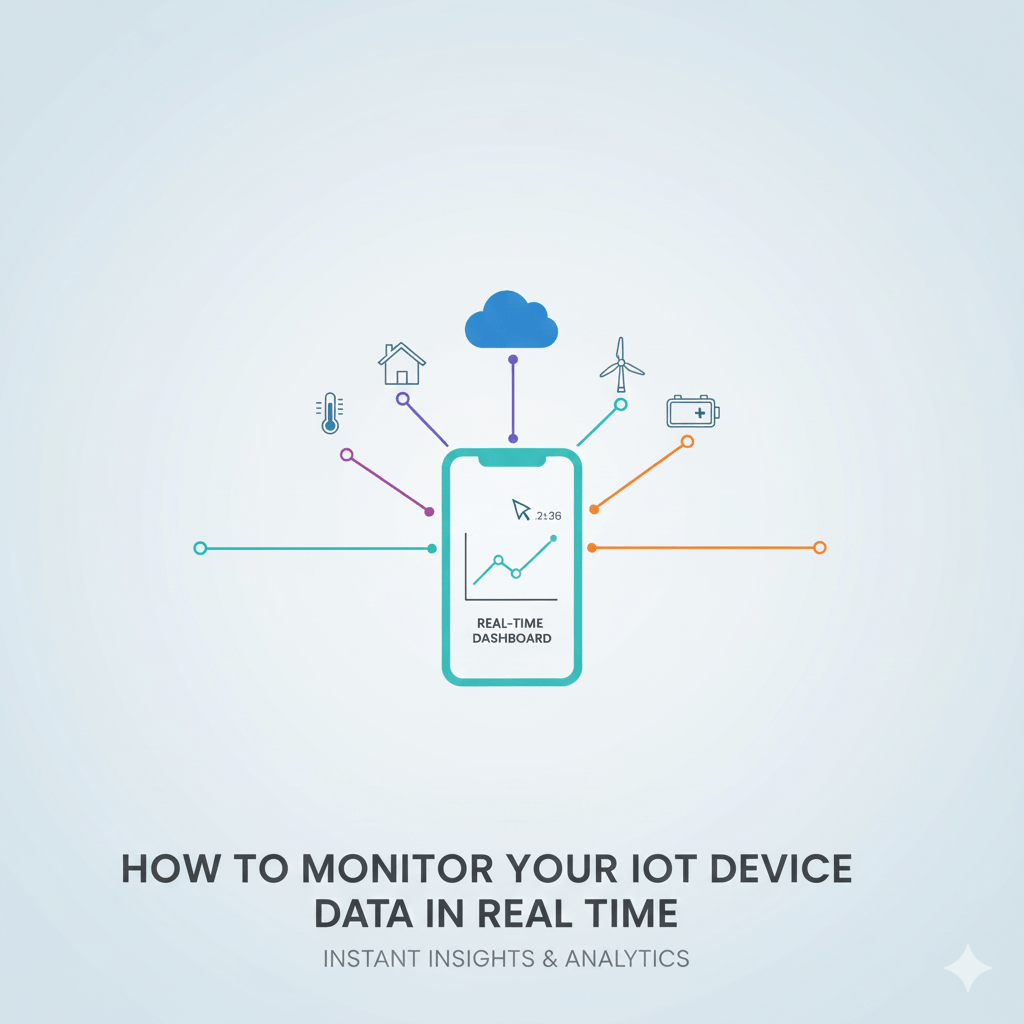
How to Monitor Your IoT Device data in Real Time
In the rapidly evolving landscape of the Internet of Things (IoT),the ability to monitor IoT device data in real time is no longer optional-it’s mission-critical. These connected devices underpin everything from smart cities to industrial automation, demanding continuous, high-fidelity visibility into data streams to drive decisions, optimize operations, and secure networks.
Real-time monitoring acts as the pulse of an IoT ecosystem, enabling rapid response, predictive maintenance, and proactive anomaly detection. Without it, businesses risk blind spots, inefficiencies, and security vulnerabilities.
Understanding Real-Time IoT Data Monitoring: Fundamentals and Necessity
What Constitutes Real-Time in iot Context?
Real-time monitoring in IoT refers to the near-instant collection, processing, and visualization of data streams generated by connected devices. The definition of “real time” varies by submission-milliseconds matter in autonomous vehicles, while a few seconds might suffice for environmental sensing systems. Key characteristics include low latency, continuous data ingestion, and immediate alerting.
Why Real-Time Monitoring is a Buisness Imperative
Real-time insights fuel agile decision-making, enhance user experiences, and dramatically reduce downtime. As a notable example,factory floor sensors detecting equipment vibration anomalies can trigger maintenance before costly failures occur. Similarly, smart grid IoT systems dynamically balance energy loads responsive to real-time consumption data.
- Operational efficiency: Leveraging live data to optimize resources and workflows.
- Security posture: Detecting and mitigating threats as they emerge.
- Customer satisfaction: Real-time responsiveness for service betterment.
Protocols and Data Transport Mechanisms Behind Real-Time IoT Monitoring
MQTT: The Lightweight Telemetry Protocol
The MQTT protocol remains the cornerstone for efficient IoT messaging.Its publish-subscribe architecture significantly reduces network overhead while supporting persistent session states, making it ideal for devices with constrained bandwidth or intermittent connectivity.
HTTP/2 and WebSockets: When Bi-Directional Streams Matter
For applications requiring persistent, bidirectional dialog – such as remote device control or live telemetry dashboards – WebSockets offer a robust solution. complemented by HTTP/2 protocols, these mechanisms provide efficient multiplexing and reduced latency.
Emerging Protocols: CoAP and LwM2M
The Constrained Application Protocol (CoAP) and Lightweight Machine-to-Machine (LwM2M) protocols address challenges of extremely constrained iot devices. Their support for UDP, multicast, and efficient resource revelation make them prime for ultra-low-power, real-time sensor networks.
Architecting Real-Time IoT Monitoring Systems for Scale and Resilience
The Role of Edge Computing in Minimizing latency
Pushing data processing close to IoT devices at the edge mitigates latency and reduces cloud dependency. Devices or local gateways preprocess data-filtering or aggregating streams- before sending critical insights upstream, preserving bandwidth and accelerating response.
Leveraging Cloud-Native Analytics and Message Brokers
Public cloud platforms (AWS IoT, Azure IoT Hub, Google Cloud IoT Core) provide scalable ingestion pipelines powered by technologies like apache Kafka or RabbitMQ. These message brokers handle millions of event streams together, ensuring reliable, ordered data delivery essential for real-time operations.
Data Pipelines and Stream Processing: Balancing Speed and Accuracy
Apache Flink, Apache Spark streaming, and AWS Kinesis Data Analytics exemplify robust frameworks enabling real-time data transformations, enrichments, and deduplication. An architect must weigh trade-offs between throughput, latency, and stateful processing needs.

Selecting Platforms and Tools for Real-Time IoT Monitoring
Open Source Giants and their Ecosystem
Tools such as Eclipse Paho for MQTT clients and Apache Kafka for event streaming form a powerful, customizable stack. Their versatility is invaluable for specialized industrial use cases were vendor lock-in is undesirable.
Commercial Platforms: Ease Versus Control
Azure IoT Central, AWS IoT SiteWise, and Google Cloud IoT offer out-of-the-box real-time monitoring dashboards, device management, and alerting pipelines, substantially accelerating time to market for startups and enterprises alike.
Visualization and Dashboard Frameworks
Robust visualization layers are essential for end users to derive actionable intelligence. Grafana, kibana, and Power BI provide real-time graphing, heatmaps, and threshold-based alerting by integrating with streaming backends via HTTP APIs or connectors.
Implementing Data Security and Privacy from Device to Dashboard
Data Encryption and Secure Channels
Securing real-time data flows demands end-to-end encryption-TLS 1.3 for transport layer protocols (MQTT over websockets, HTTPS) and AES for payload encryption. Key rotation and certificate management, facilitated by Let’s Encrypt or private PKI, mitigate compromise risks.
Identity, Authentication, and Authorization (AAA)
Device onboarding protocols like X.509 certificates,token-based OAuth,and JWT enable granular access control to data streams and cloud resources,preventing unauthorized interception or data injection.
Privacy Compliance and Data Governance
IoT deployments must align with GDPR, CCPA, and emerging global data protection regulations. Implementing data minimization, anonymization techniques, and explicit user consent workflows fosters trust and legal certainty.
“Strong security posture isn’t a feature-it’s the foundation of scalable real-time IoT data monitoring.”
Optimizing Real-Time Analytics for Business Outcomes
Defining key Performance Indicators (KPIs)
Accomplished IoT monitoring focus’s metrics like sensor uptime, event processing latency, anomaly detection rates, and resource utilization.KPIs must be contextualized per industry-what signals a fault in oil pipelines differ vastly from those in smart agriculture.
leveraging Machine Learning for Predictive Insights
Embedding AI/ML on streaming data permits pattern recognition and forecasting that human operators cannot match in speed or scope. Edge inferencing reduces data transmission while enabling immediate, localized decisions.
Common Pitfalls when Deploying Real-Time IoT monitoring
Ignoring Network Variability and Device Limitations
IoT devices frequently enough operate in harsh or bandwidth-constrained environments. Monitoring architectures must include buffering,retry policies,and adaptive data quality strategies to handle intermittent connectivity.
Overlooking Data Normalization and Schema Evolution
Device heterogeneity results in varied telemetry schemas. Without robust normalization and versioning, dashboards and analytics suffer from inconsistent data quality, causing insight loss.
Neglecting alert fatigue and Human Factors
Overly sensitive alerting triggers inundate operators with false positives. A mature monitoring system incorporates dynamic thresholds, composite events, and incident lifecycle management to balance sensitivity and usability.
Building an End-to-End monitoring Prototype: An Engineer’s Focused Walkthrough
step 1: Device Telemetry Emission with MQTT
Implement MQTT clients on IoT devices using Eclipse Paho libraries. Telemetry should be structured JSON containing timestamped sensor readings, device identifiers, and metadata.
step 2: Message Broker Setup and Stream Processing
Deploy Apache Kafka on-premises or via cloud managed services. Use Kafka Connect to ingest messages and integrate Kafka Streams for real-time filtering and enrichment workflows.
step 3: Real-Time Visualization and Alerts
Connect Grafana to Kafka via Kafka Connect or to a time-series database like InfluxDB that ingests Kafka topics.Define dashboards and configure alert rules tied to SLA breaches or anomaly scores.
mosquitto_pub -h broker.hivemq.com -t "sensors/temperature" -m '{"timestamp":1646847600,"deviceId":"sensorA","temp":22.5}'
Industry Case Studies Demonstrating Real-Time IoT Data Monitoring
Smart Manufacturing: Siemens’s Digital Factory
Siemens integrates edge computing with cloud analytics to monitor thousands of machines. Real-time data reduces machine downtime by 20% and production costs by 15%. Their modular architecture scales across global sites seamlessly.
Healthcare IoT: Remote Patient Monitoring at Philips
Philips leverages real-time vital signs via wearable devices streamed securely to cloud platforms. alerts on heart rate variability reduce emergency events by enabling timely interventions.
future Trends Shaping Real-Time IoT monitoring Technologies
5G and Beyond: Ultra-Low Latency Networks
The roll-out of 5G networks with edge computing nodes will redefine how close to near-instant connectivity real-time monitoring can become, especially for mobile or distributed assets.
federated Learning for Privacy-Preserving Edge Analytics
federated learning enables AI models to be trained locally on devices without sending raw data to the cloud, preserving privacy while maintaining analytics accuracy.
Quantum Computing Impacts on iot Data Security and Analytics
Even though nascent,quantum advances pose both a risk and possibility: new cryptographic methods are needed,but quantum algorithms may also accelerate complex real-time pattern detection.
Key Takeaways for Mastering Real-Time IoT Device Data Monitoring
- Prioritize protocols and messaging solutions tailored for your IoT ecosystem’s scale and device constraints.
- Design architectures that optimally distribute workload to edge and cloud, balancing latency with resource usage.
- Embed robust security practices into every step from device onboarding to data visualization.
- Focus on data normalization and UX to transform raw telemetry into actionable, trustworthy insights.
- Iterate actively on alerting mechanisms to minimize noise and maximize operator effectiveness.
Mastering real-time IoT data monitoring is a multifaceted challenge but a transformative capability for any business seeking to harness connected devices fully. by engineering robust,secure,and scalable systems,your organization can unlock unprecedented operational visibility and agility.