
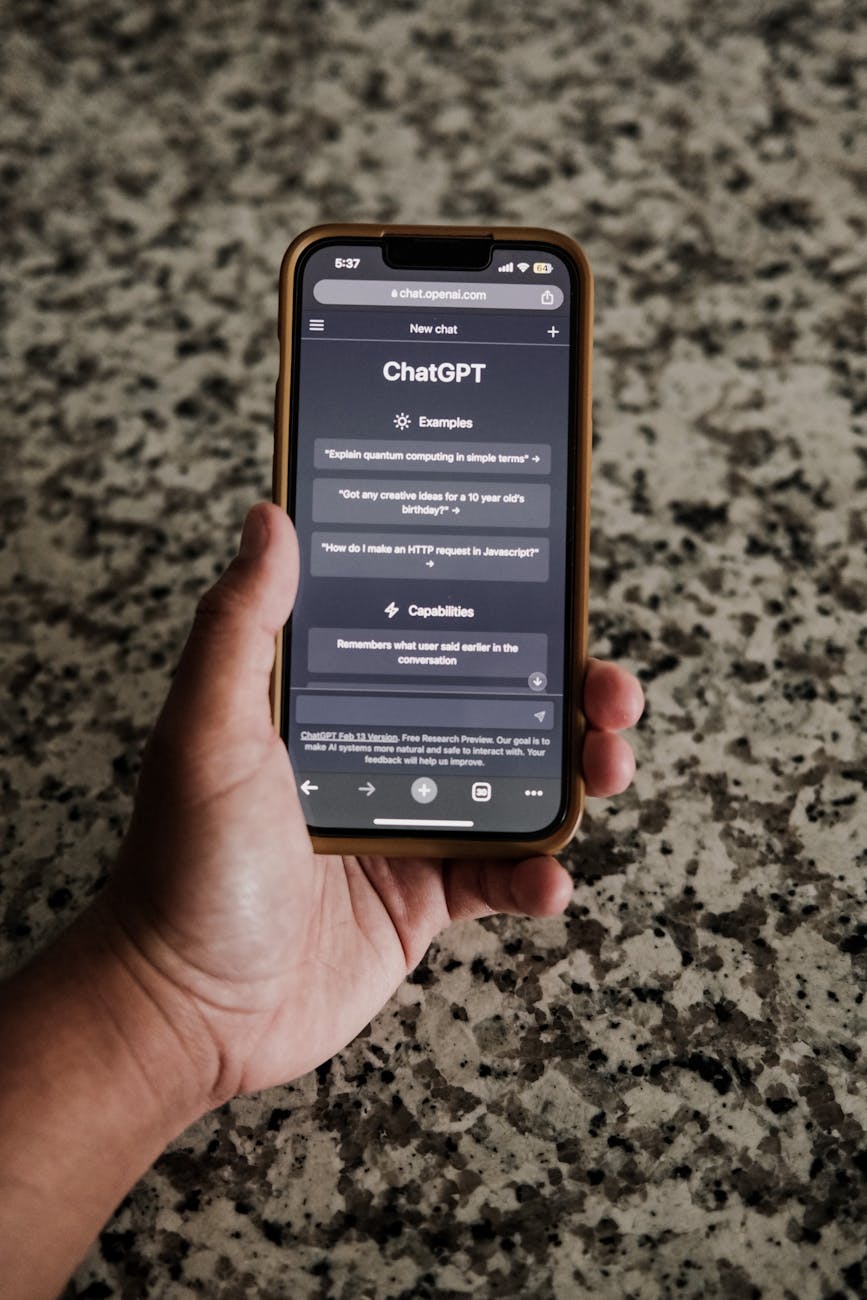
In an era where customer engagement and speedy resolution are pivotal, deploying clever chatbots powered by advanced language models like ChatGPT has revolutionized customer support systems. This extensive guide explores how developers,engineers,and technical leaders can leverage ChatGPT to design,build,and deploy chatbots that transform the customer support experience — enhancing responsiveness,personalization,and operational efficiency.
Understanding ChatGPT’s Role in Customer Support Automation
What Makes ChatGPT an Ideal Choice for Customer Support Chatbots?
ChatGPT is a generative AI language model that understands and crafts natural human-like dialog. Its versatility in language comprehension and generation allows chatbots to:
- Interpret complex customer queries with high contextual accuracy.
- Provide personalized, human-friendly replies that enhance customer satisfaction.
- Adapt across industry verticals with domain-specific fine-tuning or prompt engineering.
This futuristic technology combines simplicity with advanced linguistic prowess — redefining the standard!
Evolution from Rule-Based to AI-Powered Chatbots
traditional customer support chatbots ofen rely on scripted, rule-based systems with limited understanding of nuances or context. chatgpt-powered bots transcend these limitations by using deep learning to generate responses dynamically, which results in more natural and satisfying interactions.
Architectural Considerations When Building ChatGPT Customer Support Bots
Core Components of a ChatGPT-Driven Support Chatbot
The architecture of a ChatGPT chatbot typically includes:
- User interface (UI): Web widgets, mobile apps, messaging platforms (e.g., WhatsApp, Messenger).
- Backend API Layer: manages chat sessions, integrates with ChatGPT, and handles business logic.
- ChatGPT Model Access: Via OpenAI’s API or custom hosted versions.
- Data Integration: To pull customer information, knowlege bases, CRM data.
- Analytics and Monitoring: Track user interactions and performance metrics.
Design Patterns for ChatGPT Integration
there are varied approaches to integrate ChatGPT in customer support bots:
- Direct API calls: Forward user messages to ChatGPT, receive and display responses.
- Middleware workflows: Integrate with orchestration layers to enrich responses with external data.
- Hybrid Models: Combine ChatGPT with rule-based fallback to balance creativity and accuracy.
Preparing Your Habitat: APIs, SDKs, and Developer Tools
Accessing OpenAI’s ChatGPT API
To build a chatbot, register for an OpenAI account and obtain API keys from the OpenAI API dashboard. The API supports RESTful requests using HTTP POST with parameters like messages to shape conversational context.
{
  "model": "gpt-4",
  "messages": [
    {"role": "system", "content": "You are a helpful customer support assistant."},
    {"role": "user", "content": "How do I reset my password?"}
  ]
}
SDKs and Language Support
While the API accepts standard HTTP requests, OpenAI provides official SDKs for Python and community drivers for JavaScript,Java,Ruby,and more. Choose an SDK aligning with your tech stack to expedite progress.
Local Testing with playground and Mock APIs
Experiment with prompt design and conversation flow using the OpenAI Playground. For CI/CD pipelines, mock API responses with tools like nock to ensure resilient chatbot logic without excessive costs or rate limits.
crafting Effective Prompt Engineering for Customer Support Contexts
Role of System Messages for Context Control
System-level instructions guide ChatGPT’s response style and knowledge boundaries. For customer support, clearly define its role to maintain professionalism, empathy, and factual accuracy.
Examples of Domain-Specific Prompts
Here is a sample system prompt tailored to e-commerce support:
You are an expert customer support assistant for ShopEase e-commerce platform. Provide polite, concise, and accurate responses to queries about orders, returns, and shipping.
Dynamic Context Injection and Slot Filling
Inject customer data (e.g., order status, user name) at runtime to personalize responses:
{
  "role": "system",
  "content": "You are helping customer jane Doe with order #12345."
}
Avoiding Hallucinations & Ensuring Grounded Responses
ChatGPT may generate plausible-sounding but incorrect info. Mitigate this by:
- Combining model outputs with verified databases or APIs (retrieve & rerank).
- Implementing fallback warnings if confidence is low.
Integrating ChatGPT Chatbots with Customer Support Systems
connecting to CRM and Knowledge Bases
Enhance chatbot efficacy by integrating with platforms like Salesforce,Zendesk,or custom ticket systems. Use APIs to:
- retrieve customer profiles and past interactions for personalized advice.
- Access knowledge articles to supplement bot-generated answers.
Orchestrating Multi-Turn Dialogues
Store conversation histories in session layers to maintain context across multiple exchanges. Use state management via redis or database sessions to feed message history back to ChatGPT API calls.
Fallback and Escalation Strategies
When chatbot responses are insufficient, design mechanisms to escalate interactions to human agents effectively, including session handoff data transfer protocols.
Designing User Interfaces for ChatGPT-powered Support Bots
Platform-Specific Chat Widgets
Choose UI frameworks and widgets depending on target channels:
- Web: Modular JavaScript chat components (e.g., Stream Chat React).
- mobile: Native SDKs or React native wrappers.
- Messaging apps: Use platform bots (Slack,Microsoft Teams) integrated with backend APIs.
Optimizing UX for Clarity and Speed
Minimize input friction with features like autocomplete, suggested questions, and typing indicators.Allow easy access to FAQs and escalation options.
Ensuring Security, Privacy, and Compliance
Handling Sensitive Customer Data Safely
Adhere to strict data privacy protocols, ensuring that PII is encrypted at rest and in transit. Utilize tokenization when integrating with APIs for compliance with GDPR,CCPA,and other regulations.
Audit Logs and Conversation Data Retention
Maintain audit trails while balancing user privacy. Implement configurable retention policies and opt-in/opt-out mechanisms per jurisdiction.
Mitigating Malicious Inputs and Abuse
Implement input validation and rate limiting to counter chatbots’ exposure to injection attacks, prompt injections, or spam.
Scalability and Performance Optimization of ChatGPT Chatbots
Managing API Rate Limits and Cost Efficiency
As API calls accumulate with user growth, use batching techniques, caching frequent answers, or model distillation to optimize costs.
Latency Reduction Strategies
deploy your backend in proximity to OpenAI datacenters and use persistent websocket connections (where available) for streaming responses.
KPI monitoring and Metrics for Chatbot Health
track metrics such as response latency, user satisfaction scores, fallback rates, and conversation volumes to iteratively improve the bot.
Testing,Training,and Continuous Enhancement
Prototyping and Beta Trials
Run controlled user tests to gather behavioral data. Use A/B testing for different prompt strategies to optimize engagement.
Human-in-the-Loop Feedback Loops
Establish human review pipelines that identify erroneous responses and retrain fine-tuned models or tune prompts accordingly.
Automated Error Detection and analytics
Leverage NLP evaluation metrics like BLEU, ROUGE, or custom success criteria tailored to customer intent recognition accuracy.
Real-Life Use Cases of ChatGPT Customer Support Chatbots
Retail and E-Commerce
Brands implement ChatGPT bots for order tracking,FAQ automation,and personalized style recommendations—boosting sales conversions.
Telecom and Utility Providers
Service providers handle high volumes of billing queries, service outages, and plan comparisons with ChatGPT-enabled conversational assistants.
Healthcare Support
Chatbots triage patient requests and provide information on appointments and medication, within strict compliance boundaries.

Emerging Trends and future Directions in AI Customer support Chatbots
Multimodal Agents Combining Text, Voice, and Vision
Future chatbots will seamlessly integrate multiple modalities, handling voice commands and interpreting images or video to assist customers more holistically.
Personalized AI Assistants with Deep Domain Expertise
By long-term learning and knowledge graph integration, bots will become personalized advisors attuned to individual customer history and preferences.
Open-Source and Edge Deployment of ChatGPT Models
Local or on-premise model deployment will become viable, reducing latency and preserving data privacy for sensitive industries.