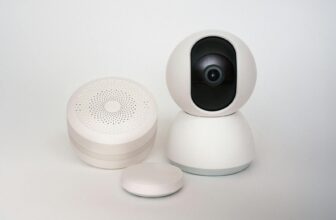

In the current wave of technological innovation, the concept of a smart home captivates both enthusiasts and professionals alike. Promises of convenience, energy efficiency, and seamless automation inspire many developers and entrepreneurs to bring smart environments to life. But beneath the polished interfaces and sleek voice commands, there lurks a latent menace-an operational security flaw that can undo the best-intended smart homes. I embarked on a personal project to architect and deploy a fully integrated smart home system. Throughout this journey, I uncovered a essential security vulnerability that casts a long shadow over the future of connected living.
Unpacking the Smart Home Ecosystem: Complexity Breeds Risk
Smart homes today are kaleidoscopes of interconnected devices-thermostats, smart locks, lighting, cameras, voice assistants, and sensors. Each component speaks its own protocol dialects, engaging over Wi-Fi, Zigbee, Z-Wave, Thread, or proprietary standards. The combination aims for harmony,but the cacophony of protocols and vendors introduces sprawling attack surfaces. Concepts like _edge computing_ and localized automation hubs bring new layers but also added complexity in security management.
Interoperability challenges and their security implications
While interoperability frameworks such as Matter are gaining momentum, my build consisted primarily of modular devices sourced independently. Without a standardized security backbone, each integration required bespoke credential management and trust assurances. This unconventional mosaic led to sprawling identity vectors that are inherently difficult to monitor and secure holistically.
Decentralization versus centralized control
Smart home systems fluctuate between decentralized peer-to-peer device interactions and centralized orchestration via hubs or cloud platforms. I experimented with both approaches, noting that decentralized designs, while resilient, complicate unified security postures. Simultaneously occurring, centralized cloud-based controls invite heightened risk of single points of failure or data breaches in third-party platforms.
Practical pitfalls in device onboarding and credential exchange
Device onboarding represents the keystone of the smart home chain of trust. During my setup, I discovered that many devices rely on over-the-air pairing with minimal cryptographic rigour. Often, default or weak passwords and unsecured onboarding channels opened avenues for credential leakage and unauthorized device takeover-a danger somewhat masked by vendor marketing gloss.
A Deep-Dive into the Largest Security Weakness: Legacy Protocols and Authentication Shortcomings
Among all observed vulnerabilities, one flaw stood out with breathtaking clarity-the reliance on legacy dialogue protocols with insufficient authentication mechanisms. Devices using plain-text or poorly encrypted traffic, paired with fixed or weak shared secrets, became the Achilles’ heel of the entire smart system.
How legacy protocol weaknesses undermine end-to-end security
Many IoT devices still depend on protocols like MQTT without complete encryption or mutual authentication. With minimal handshake validation,malicious actors can eavesdrop,hijack,or mimic devices within the same network scope. My own capture of traffic revealed unencrypted token exchanges and occasional replayable packets-devastating impacts on confidentiality and control integrity.
The mismanagement of cryptographic keys and certificates
A surprising discovery was the prevalence of static keys hardcoded in firmware or shared universally across device instances. these static secrets bypass industry best practices of ephemeral keying or device-specific certificates, drastically increasing exposure in case one unit is compromised. I further observed that firmware updates rarely rotated keys, leaving old vulnerabilities enduring indefinitely.
Authentication design trade-offs in resource-constrained devices
Smart home devices frequently sacrifice robust authentication to meet power, computational, and cost constraints. Lightweight cryptography or token-based schemes sometimes default to easily guessable or brute-force-able credentials. This compromises trust anchors and invites lateral movement through a smart homeS internal network-one compromised thermostat can be a springboard to the security hub.
Revisiting Network segmentation: A Tactical, Yet Insufficient Guard
Network segmentation often serves as the frontline defense, isolating IoT devices from critical personal or business networks. While I implemented VLANs and firewall rules to separate smart devices, I quickly realized the tactic only delayed, not prevented, an attacker’s expansion. Once foothold is gained in the IoT zone, pivoting attacks can exploit weak lateral movement defenses.
Designing VLANs and firewalls suited for dynamic smart home traffic
Segmenting a smart home network demands balancing strict access control policies with the flexibility required for device discovery and OTA updates. Rigid firewall rules can hamper automation while lax rules create blind spots. Proper implementation requires granular, contextual policies aware of device behavior and roles.
Challenges with BYOD and guest network access
Real-world homes are not static. Visitors bring their own gadgets, requiring segmented guest networks. these transient devices can become untrusted jump points if cross-network communication is inadequately restricted. The interplay between guests, devices, and smart systems must be managed with dynamic policy automation beyond simple port blocking.
Cloud Dependency and Third-Party Risks in Smart Home Architectures
Cloud services play a pivotal role in modern smart homes, handling command processing, voice recognition, and remote access. My research exposed excessive trust placed on cloud vendors, with multiple attack vectors originating from unauthorized cloud service access or vendor misconfigurations.
Risks of over-the-cloud automation workflows
Cloud integration enables convenience but multiplies security concerns. The transit of sensitive user data over public internet links coupled with potential API vulnerabilities exposes the entire smart ecosystem. An intercepted access token or hijacked cloud session coudl trigger unauthorized physical actions like unlocking doors or disabling alarms.
Vendor lock-in versus security transparency
Smart home platforms typically come with proprietary ecosystems,limiting user insight into internal data flows and security audits. Many vendors lack comprehensive security transparency reports or autonomous third-party assessments, leaving users to trust opaque operational models. A truly secure smart home demands open, auditable controls at every integration point.
Visualizing Smart Home Security Architecture and attack Surfaces
 attack surfaces highlighted” style=”border-radius:12px;max-width:100%;height:auto;”>
Mapping device trust boundaries and network overlays
Graphically representing smart home zones-device subnetworks, control hubs, cloud APIs, and user interfaces-clarifies where security breaches might propagate. Establishing explicit trust boundaries at wireless mesh layers, device access APIs, and cloud linkage points is crucial.
Common vectors for lateral movement and privilege escalation
Lateral attack paths often exploit inadequate credential isolation or communication protocols lacking mutual authentication. Privilege escalation can be achieved by replaying signed commands or manipulating device firmware without secure update verification.
Strategies to Mitigate the Identified Security Flaw: Moving Beyond the Default
Discovering the central flaw being legacy protocol use with weak or static authentication compelled me to architect countermeasures that reimagine trust without compromising usability. Implementing these at scale in a home surroundings poses unique challenges.
Enforcing robust device identity and mutual authentication
Transitioning to identity-centric device management through public Key Infrastructure (PKI) and device-specific certificates dramatically enhances authentication rigor. Although costly and complex,this approach establishes strong cryptographic proof of device legitimacy beyond shared secrets or default credentials.
deploying network-level encryption and continuous behavioral monitoring
Enforcing WPA3-level Wi-Fi encryption and channel isolation is foundational. Complementing this with encrypted end-to-end tunneling protocols and deployment of network intrusion detection systems tuned for IoT patterns enables proactive breach detection and containment.
Automated key rotation and firmware security assurance
Automating cryptographic key rotation and adopting secure boot with digitally signed firmware updates helps close persistent openings traditionally exploited by attackers. Rapid detection and patching of vulnerabilities prevent escalation from initial compromise.
Modern smart homes depend on security models that must evolve as rapidly as their technology - static defaults or legacy protocols won’t cut it anymore, and it just works!
How Developers and Engineers Can Design Better for Smart Home Security
Engineering teams designing smart devices and platforms must embed security into every stage of growth. This includes threat modeling, secure coding practices, and rigorous protocol design aimed squarely at these legacy weaknesses.
Incorporating threat modeling into device lifecycle
Developers shoudl proactively identify potential attacker intent and access points before finalizing device hardware and software designs. This includes enumerating potential adversaries, likely attack surfaces, and risk severity-ensuring mitigation strategies align with real threat landscapes.
Utilizing secure development frameworks and tools
Adopting industry-vetted cryptographic libraries and following guidelines outlined by consortiums like the European Telecommunications Standards Institute (ETSI) Smart Home Security Specifications provides frameworks to avoid common pitfalls in secure IoT development.
Emphasizing user-centric security design
Devices and apps should enable simple, transparent user controls over device permissions, network access, and update mechanisms. Educating end-users about risks and offering clear security status indicators foster responsible home network hygiene.
The Investor and founder Perspective: Market Impact and Security as a Differentiator
For founders and investors in the smart home space, addressing this fundamental security flaw is not merely a technical challenge but a critical market imperative. As consumer scrutiny around privacy rises alongside regulatory pressure, robust security becomes a decisive competitive advantage.
Security as a value proposition for customer trust
Marketing smart home products with verified third-party security certifications and transparent privacy policies increases buyer confidence and adoption rates. Conversely, high-profile breaches can severely damage brand reputation and market valuation.
Balancing innovation pace with responsible security practices
Startups face intense pressure to innovate rapidly but must temper this with strategic investments in security engineering to avoid costly recalls or post-deployment fixes. Security-by-design approaches can streamline compliance and reduce technical debt.
Regulatory landscape shaping future smart home markets
Emerging regulatory frameworks such as NIST’s IoT Cybersecurity Betterment Act guidance and the EU Cybersecurity Act set increasing standards for connected device safety.Founders navigating these requirements early will position products for sustainable success.
Future-proofing Smart Homes: Innovations Toward Secure Connectivity
Emerging technologies promise to remediate today’s vulnerabilities. Quantum-resistant cryptography, decentralized identity management, and AI-powered threat detection are poised to reshape smart home security architecture profoundly.
Decentralized identity and blockchain-based trust models
using blockchain for decentralized device identity allows verifiable and tamper-proof authentication without depending solely on centralized cloud authorities. Several research projects demonstrate feasibility for trustless smart home ecosystems leveraging distributed ledgers.
AI-driven anomaly detection and adaptive defenses
Machine learning models trained on typical device behaviors can identify subtle deviations indicative of intrusion or malfunction.Such systems offer real-time alerting and automated quarantine actions, raising defenses to new proactive heights.
Next-gen protocols with built-in security primitives
Innovative networking protocols designed from the ground up for constrained IoT environments embed end-to-end encryption, mutual authentication, and forward secrecy as mandatory elements rather than bolted-on features. Standards like Matter represent important steps toward these ideals.
A Final Reflection on Building and Securing Smart Homes
the journey of building a smart home exposed a critical paradox: the very technologies promising to shape future comfort also magnify vulnerabilities if legacy habits persist. the largest security flaw-weak, static authentication embedded in legacy protocols-can only be overcome by holistic reengineering of trust models, protocol design, and user empowerment. As this space matures, the intersection of diligent engineering, transparent cloud practices, and advanced cryptographic frameworks will define the safety and privacy of tomorrow’s smart living spaces.
_Modern smart homes depend on security models that must evolve as rapidly as their technology-and it just works!_ One must never underestimate the importance of security rigor in transforming smart home conveniences into truly dependable and resilient digital sanctuaries.The future of technology-enhanced living demands nothing less.