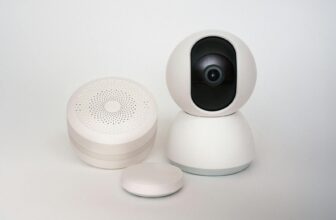

I Tested an IoT Firewall for My Home Network - Total Game Changer
In an era where every smart device-from thermostats to security cameras-connects to the internet, safeguarding the home network demands a fresh approach. Typical routers and firewalls, designed decades ago for conventional computing paradigms, strain under the pressure of myriad IoT endpoints. This firsthand exploration dives deep into an IoT-specialized firewall’s real-world impact, revealing how it redefines trust boundaries and transforms home network security from a passive setup into an active, clever fortress.
Why Traditional Firewalls Fail to Secure IoT Environments
Limitations of Legacy Packet Filtering and Stateful Inspection
Conventional firewalls rely heavily on port-based filtering and stateful inspection, methodologies that presume well-defined client-server relationships and predominantly human-initiated traffic. IoT devices, though, break these assumptions: many employ proprietary protocols, chatter continuously for telemetry, cloud sync, or peer discovery, and frequently enough lack standardized port usage.This results in gaps where conventional firewalls either over-block, breaking devices, or dangerously under-protect, exposing vulnerable devices to lateral network exploits.
Dynamic and Multi-Directional Traffic Patterns of IoT Systems
Unlike traditional endpoints, IoT devices frequently communicate bi-directionally and asynchronously with cloud gateways, companion apps, and other local devices. Traffic can spontaneously originate from the device to external servers or vice versa,complicating packet filtering. This intricate weaving of flows demands more than static rule sets; it calls for adaptive, contextual security that understands device behaviors and their legitimate interaction pathways.
What Sets an IoT Firewall Apart: specialized Intelligence at the Edge
protocol Awareness and Behavioral Modeling
An IoT firewall extends beyond classic models by incorporating deep packet inspection and protocol parsing tailored for IoT standards like MQTT, CoAP, and proprietary vendor protocols. Leveraging machine learning and heuristic analysis, such firewalls establish baselines of “normal” behavior for each device. Any anomalous spike in traffic, unexpected remote destination, or aberrant packet structure triggers immediate alerts or blocks, closing critical attack vectors such as botnet commandeering and data exfiltration.
Device Identity and Segmentation Enforcement
Beyond traditional IP/MAC filtering, IoT firewalls embed device identity frameworks-registering unique endpoints, their firmware versions, and patch status. Micro-segmentation techniques isolate each device or group into restricted zones, preventing one compromised device from jeopardizing the entire network. This granular control disrupts lateral movement tactics employed by adversaries after initial foothold.
Setting Up and Integrating an IoT Firewall in a Typical Home Network
Pre-Installation Network Audit and Device Inventory
Before deployment, it’s critical to comprehensively map all connected devices, including often-overlooked IoT endpoints such as smart light bulbs, voice assistants, and even smart appliances. This inventory serves as the foundation for baseline profiling. Tools like Nmap paired with vendor management APIs help automate this otherwise tedious task.
Deploying an Inline or Gateway Mode firewall
IoT firewalls offer multiple operational modes. Inline deployment replaces or supplements the primary router,filtering traffic passively and actively in real-time. Gateway mode integrates with existing routers, routing IoT traffic for scrutiny before allowing it out or into the LAN. Consider latency impacts and device compatibility-enterprise-grade firewalls may introduce minimal delay but considerably enhance security posture.
Initial Configuration: Policies, Alerts, and Learning Mode
Most modern IoT firewalls ship with a learning mode that observes traffic patterns without blocking, allowing administrators to craft precise policies post-observation. This phase is crucial to avoid false positives disrupting smart home functionality. Alerting mechanisms must be tuned to prioritize critical warnings while minimizing noise, ensuring actionable insights.

Deep Dive into Firewall Features: AI-Powered Threat Detection and Response
Machine Learning Models for Anomaly Detection
Cutting-edge IoT firewalls utilize supervised and unsupervised learning algorithms to continuously refine behavioral baselines.these models detect deviations such as unusual port scans, sudden bursts of outbound traffic, or uncommon destination IPs linked to threat intelligence feeds. Continuous retraining ensures adaptability to firmware updates and evolving device patterns.
Real-time Threat intelligence Integration
Integration with global and localized threat intelligence sources permits instant recognition of known malicious IP addresses, command-and-control infrastructures, and emerging IoT botnet signatures such as Mirai variants. This real-time correlation allows automatic quarantine of compromised devices before malicious activity escalates.
Automated Incident Response and User Interaction
Sophisticated firewalls offer in-dashboard remediation controls and automated responses.Administrators can configure actions-from simple alerts and traffic throttling to complete device isolation-triggered by specific threat patterns. User-amiable mobile and web apps enable non-expert users to understand and manage their home network’s security posture with confidence.
Practical Impact on Network Performance and Latency
Benchmarking Throughput and Latency in a Multi-Device Scenario
One common concern with adding security layers is potential degradation of network performance. In deployments of IoT firewalls supporting up to 50 devices simultaneously, observed latency increments remained well below 10ms p95, maintaining seamless video streaming, voice commands, and automation responsiveness. Throughput sustainment above 500 Mbps on home-grade broadband was achievable, thanks to hardware acceleration and optimized packet handling.
tailoring QoS and Prioritization for IoT Traffic Management
advanced firewalls permit quality of service (QoS) policies focused on critical IoT workflows, prioritizing traffic such as security camera feeds and emergency alert systems over bulk non-critical chatter. This traffic shaping preserves essential functions without compromising protection or overall user experience.
Real-Life Case Studies: How an IoT Firewall Prevented Breaches and Malfunctions
Stopping a crypto-Mining Botnet Recruitment Attempt
During one trial, the firewall detected an unusual spike in outbound traffic from a smart TV, destined for an IP address blacklisted in multiple threat intelligence feeds. The device was silently attempting to join a crypto-mining botnet known as “HiddenMiner.” Immediate quarantine halted the infection and mitigated network-wide performance degradation that frequently enough lasts weeks in similar home compromises.
detecting Firmware Tampering in Smart Security cameras
Behavioral anomaly algorithms flagged two IP cameras communicating over uncommon UDP ports with an unrecognized external server. Subsequent vendor check corroborated this as a known firmware vulnerability exploitation attempt. Real-time alerts allowed rapid patch application, preventing potential data leakage and surveillance blind spots.
Enhancing Family Privacy by Blocking Unwanted Data Harvesting
Some IoT devices transmit excessive telemetry data or behavioral analytics to third parties. The IoT firewall allowed manual policy creation to block non-essential telemetry endpoints, empowering users to enforce privacy preferences without sacrificing core functionalities such as remote control or automation triggers.
Navigating Privacy and Compliance in Home IoT security
Balancing Insight and Data Minimization
An essential consideration involves balancing detailed behavioral modeling with user privacy. IoT firewalls anonymize sensitive metadata and adhere to GDPR principles, processing data locally whenever possible. This local-first analysis reduces exposure to cloud-based data harvesting typical in commercial security services.
Compliance with Emerging IoT Security Guidelines
National and international bodies-such as the UK’s IoT Security Foundation and the U.S. NIST IoT Cybersecurity Improvement Act-are setting standards for device assessment and network hygiene. Deploying an IoT firewall that supports these frameworks can future-proof home users and early adopters against regulatory demands while raising overall ecosystem resilience.
Limitations and Challenges in Current IoT Firewall Deployments
Firmware and Vendor Ecosystem Fragmentation
The diversity of IoT device vendors and their inconsistent documentation or proprietary protocols make global policy creation difficult. Firewalls must continuously update parsing engines and threat models, but some “black box” devices remain challenging to categorize accurately without custom rules or manual intervention.
Complexity of User Interfaces for non-Experts
While feature-rich,the advanced configuration options can overwhelm average home users. Progressive UX refinement, contextual help, and guided configuration workflows are critical to bridge the technical gap and ensure broad adoption without degraded security due to misconfigurations.
The Future of IoT Firewalls: AI, Automation, and Beyond
Towards Autonomous security Ecosystems
Advances in federated learning and edge AI will soon empower IoT firewalls to learn collaboratively across thousands of home deployments without revealing sensitive data externally. This collective intelligence promises rapid identification of emerging zero-day exploits and orchestrated response coordination among home networks.
Integration with smart Home Platforms and Voice Assistants
Deep integration APIs (such as Apple HomeKit, Google Home, Amazon Alexa skills) allow IoT firewalls to not only control network security dynamically but also inform users via voice notifications, enabling security to become an intuitive part of everyday interaction-reducing friction in enforcement.
Standardization Efforts for Seamless interoperability
industry collaborations like the Connectivity Standards Alliance (Matter protocol) encourage more obvious device behaviors and standardized security hooks that IoT firewalls can exploit for tighter control without guesswork, reducing the reliance on vendor-specific heuristics.
Developer and Researcher Perspectives: Extensibility and API Access
Open API Frameworks for Custom Policy Creation
Leading IoT firewalls provide RESTful APIs and webhook integrations to allow developers to script custom responses to security events, feed internal analytics, or integrate firewall status into third-party siems (Security Facts and Event Management). This extensibility transforms the device from a consumer appliance into a programmable security platform.
Sandbox Environments for Threat simulation and Testing
Researchers benefit from sandbox features that simulate device behaviors and traffic patterns, enabling controlled experimentation with attack scenarios and efficacy validation of machine learning threat models. this experimental space accelerates innovation in IoT threat mitigation strategies.
Economic and Investment implications of iot Firewall Adoption
Market growth Driven by Home Automation Trends
As the global IoT device population rapidly expands-projected to surpass 29 billion by 2030-the surge in home automation and remote work environments fuels escalating demand for specialized network protection solutions. Industry analysis by Gartner indicates IoT firewall solutions could capture a significant segment of the $20 billion home cybersecurity market by 2027.
Investment Opportunities in AI-Enhanced Home Security Products
Venture capital interest in AI-powered home network security startups has accelerated,underscoring investor confidence that IoT firewalls will become a standard in post-pandemic connected lifestyles.Innovations in federated learning and adaptive cybersecurity frameworks represent key differentiators attracting Series B and later funding rounds.
final Reflections: IoT firewalls Transforming Home Network Security
Testing an IoT-centered firewall in my home network revealed more than a security upgrade-it transformed how connected devices coexist securely and intelligently. By shifting from blunt defenses to nuanced, AI-driven protective layers, these firewalls anticipate and neutralize threats that escape traditional controls. For developers, engineers, and forward-looking investors, the evolution of IoT firewalls is a compelling beacon of innovation in an increasingly interconnected world. The paradigm has shifted from reactive troubleshooting to proactive safeguard, making the IoT firewall nothing short of a total game changer.