introduction
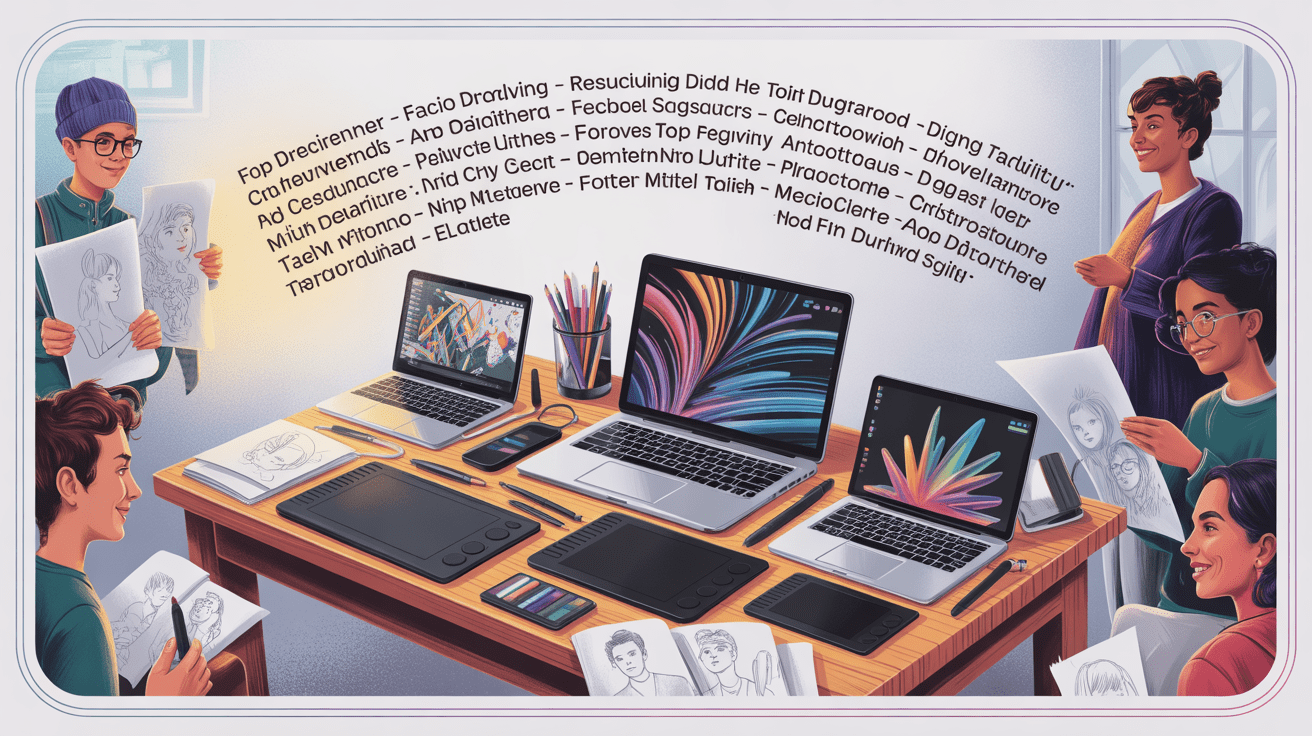
In an era where digital innovation has transformed creative workflows, drawing tablets have emerged as essential instruments for both budding and professional artists worldwide. The democratisation of digital art tools married with advances in precision display technology, pressure sensitivity, and portability has made drawing tablets increasingly accessible. Whether for creating digital paintings, concept art, graphic design, or animation, understanding the top drawing tablets for beginners and digital artists is crucial. This article delivers an extensive evaluation of the premier devices in 2024, rooted in expert analysis and industry-standard technology benchmarks.
Understanding Drawing Tablets
Drawing tablets, also known as graphics tablets or pen tablets, are input devices that convert user hand movements into digital strokes. These tablets range from screen-less devices that connect to a computer to integrated tablets with embedded high-resolution displays. The underlying logic involves real-time translation of analogue pen pressure, tilt, and position data into digital art software, allowing artists to work intuitively. This technology enables nuanced control over brush strokes, mimicking conventional mediums with hyper-realism.
Institutions like MIT have contributed to the evolution of pen input technology, optimizing digitiser precision and latency reduction. Manufacturers such as IBM have also explored multi-touch palm rejection and haptic feedback to enhance ergonomics and artist experience.
Technical Foundation
At the heart of every drawing tablet lies a complex assembly of digitizer technology, pressure sensors, and display interface, all synchronized with dedicated drivers and software SDKs. These devices primarily leverage electromagnetic resonance (EMR) or active capacitive stylus technology to detect stylus movements with accuracy.
The interaction with artificial intelligence-powered software such as Photoshop, Procreate, or clip Studio Paint hinges on tablet-driver interaction protocols that convert analog signals into vectors and pixels.
Modern drawing tablets integrate with cloud computing platforms to enable seamless workflow continuity. As a notable example, tablets coupled with Adobe Creative Cloud or Corel Painter facilitate AI-assisted brush stroke prediction and customization – an advancement partly attributable to GPU acceleration from manufacturers like NVIDIA. Furthermore,tablets incorporate wireless connectivity and Bluetooth modules for enhanced mobility,interfacing with web growth and creative coding paradigms.

Real-World Applications
Drawing tablets serve diverse industries: digital art, graphic design, animation, industrial design, architecture, education, and even medical illustration. The interface offered by such tablets is critical in gaming studios for concept art, streamlined workflows in architecture for rapid prototyping, and educational tools in remote learning environments.
Corporations such as NVIDIA leverage drawing tablet inputs to integrate AI-driven art generation tools, augmenting artist productivity. Similarly, Google has incorporated stylus technology within their Pixel devices, blurring lines between tablet and smartphone art creation. Amazon Web Services supports scalable backend infrastructures enabling artists to store, share, and collaborate on digital artwork globally via cloud-based platforms.
Advantages and Business Impact
Adoption of drawing tablets translates to measurable productivity gains by accelerating digital art production timelines, reducing material costs inherent in traditional media, and providing instantaneous editing capabilities. According to Statista, the graphic tablet market has witnessed a steady compound annual growth rate (CAGR) of 7% over the past five years, indicative of entrenched business value.
Research from Gartner highlights how integration of digital input devices within creative IT ecosystems results in workflow automation and enhanced innovation cycles, especially for startups and small studios embracing digital-first content production.
Challenges and Ethical considerations
Despite the technological prowess, drawing tablets face challenges such as accessibility in underserved regions, learning curve barriers, and digital rights management in collaborative online environments. As tablets evolve, concerns about data privacy and intellectual property protection become paramount, particularly when cloud syncing and AI-assisted tools are used.
publications such as arXiv and Harvard Business Review emphasize the need for stringent user data protection policies and complete ethical frameworks to mitigate misuse of artists’ work in automated processes and unauthorized redistribution.
Market Trends and Future Vision
Emerging trends signify a convergence of drawing tablets with augmented reality (AR) and virtual reality (VR) interfaces, driven by advances in robotics and automation that allow immersive digital sculpting and 3D modeling. Startups innovating at the crossroads of IoT and digital art are garnering strong venture capital interest, evident from funding rounds reported by TechCrunch.
Increasingly, minimalist form factors combined with high refresh rates and pressure-level granularity define the next generation of tablets. Platform ecosystems encouraging open-source driver contributions further democratize access. According to a detailed report by The Verge, the focus on sustainability and e-waste reduction is steering manufacturers towards modular hardware designs paired with software-driven feature upgrades.
expert Perspectives
Digital art pioneer kyle T. Webster notes, “The evolution of drawing tablets has been pivotal for artists to break free from analog constraints, amplifying creative potential through technology.” Likewise, Wacom’s chief engineer emphasizes the integration of machine learning algorithms to predict brush behavior, dramatically reducing the latency gap historically seen in pen input devices.
Statements from software developers at Adobe highlight their focus on cross-compatibility between drawing tablets and next-gen AI tools, fostering an environment where technology serves as an enabler rather than a barrier to artistic expression.
FAQs
Q: How is drawing tablet technology transforming the art and design industry?
A: According to Wired, drawing tablets represent a paradigm shift in creative workflows by enhancing efficiency, precision, and automation. they empower a new generation of designers who blend traditional skill with digital augmentation,accelerating content creation cycles.
Q: What features should beginners prioritize in their first drawing tablet?
A: Key features include pressure sensitivity levels (ideally 2048 levels or above), active drawing area size, pen latency, driver stability, and budget. Entry-level tablets from brands like Huion and XP-Pen frequently enough provide excellent balance while supporting major creative software suites.
Q: Are display tablets better than pen-only tablets for beginners?
A: Display tablets offer direct screen interaction, enhancing intuitiveness but come at a higher price point. for beginners,pen-only tablets connected to monitors can be equally effective,allowing skill focus without overwhelming initial investment.
Conclusion
Drawing tablets are reshaping the digital art landscape by bridging tactile creativity with cutting-edge technology.Their precise engineering, combined with AI and cloud computing integrations, elevates artistic expression while streamlining workflows across diverse disciplines. From beginners exploring digital artistry to professional studios pushing visual frontiers, the continuous innovation in drawing tablets will profoundly influence the next decade of digital innovation and creative technology.
Disclaimer: This article is for educational and informational purposes only.The content reflects industry analysis and does not constitute financial or business advice.