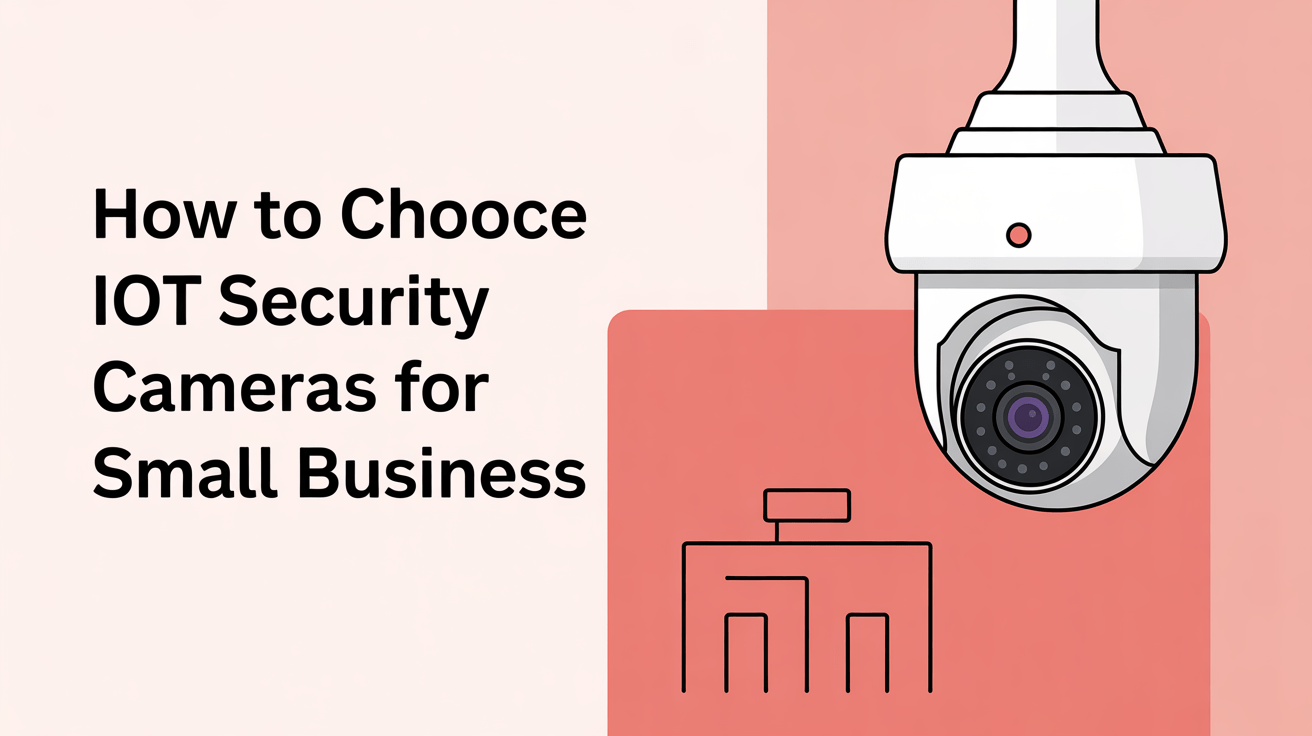
How to Choose IoT Security Cameras for Small Business: An Engineering Deep Dive
Small businesses increasingly rely on smart, connected technologies to safeguard their premises and assets. Among the most transformative of these technologies are IoT security cameras, which combine networking, edge computing, and AI to deliver real-time surveillance and actionable insights. But selecting the optimal IoT security camera system requires rigorous engineering analysis and a clear understanding of security, connectivity, deployment scenarios, and integration requirements.
This guide provides a detailed, engineer-focused framework to evaluate and choose IoT security cameras specifically tailored for the unique constraints and needs of small businesses. Weather you’re a developer integrating these devices, a founder investing in security infrastructure, or a systems engineer architecting smart surveillance, this deep dive arms you with actionable intelligence and technical best practices.
Understanding the Technical Landscape of IoT Security Cameras
Hardware Architecture and Sensor Types
IoT security cameras typically embed vision sensors such as CMOS image sensors designed to capture high-resolution video under various lighting conditions. Small businesses frequently enough require cameras equipped with infrared (IR) night vision and wide dynamic range (WDR) capabilities to ensure reliability throughout day and night cycles.
From an engineering outlook, verify that the camera’s sensor supports at least 1080p HD resolution and frame rates of 24-30 fps for smooth video. Additional sensor modules like microphones and environmental sensors (motion, temperature) add contextual awareness and enable richer analytics.
Edge Processing Units and On-Device AI
Modern IoT cameras integrate edge AI processors or NPUs (Neural Processing Units) to perform video analytics - such as person detection, facial recognition, or anomaly spotting – directly on the device.This reduces cloud bandwidth and latency, a critical design feature for small businesses where network resources might be limited.
When choosing a camera, investigate Specifications such as the SoC (System on Chip) capabilities, including processor speed, supported AI frameworks (TensorFlow Lite, OpenVINO), and hardware-based encryption modules.
connectivity Protocols and Network Integration
IoT cameras typically support Wi-Fi (802.11ac/ax), Ethernet, or cellular connectivity options. Small businesses must balance installation simplicity (favoring Wi-Fi), network stability (Ethernet preferred for critical sites), and mobility (cellular for pop-up or remote locations).
understanding supported protocols – such as MQTT, RTSP, ONVIF, and proprietary APIs – is critical to ensure seamless integration with existing security infrastructure or custom monitoring apps.
Security Architecture: Safeguarding Video Data and Device Integrity
End-to-End Encryption Standards
IoT cameras stream sensitive video data that must remain confidential and tamper-resistant. Preferred devices support Transport Layer security (TLS 1.3) to encrypt traffic between cameras and cloud or on-premise servers.
Look for cameras supporting AES-256 encryption for stored footage locally or on SD cards, and also encrypted communication channels compatible with secure VPNs or private networks.
Device Authentication and Firmware Integrity
A basic security best practice is robust device authentication, frequently enough via mutual TLS, digital certificates, or hardware TPM (Trusted Platform Module) chips. Firmware signing and secure boot processes help safeguard against unauthorized firmware alterations and supply-chain attacks.
Verify vendor openness on update policies and recall responsiveness to mitigate zero-day vulnerability exposure.
Security Patch Management and Cloud API Controls
Innovative vendors provide automated patch distribution, enabling small businesses to maintain device fleets without manual intervention. Investigate the frequency of security updates and the availability of audit trails for access logs and API calls.
Scalability and Integration with Existing Infrastructure
Compatibility with Network Video Recorders (NVR) and VMS
small businesses often utilize NVRs or Video management Systems (VMS) to consolidate multiple camera streams. Choose IoT cameras compliant with ONVIF standards to ensure interoperability.
Assess compatibility with popular VMS platforms such as Milestone XProtect,Avigilon Control Center,or open-source options like ZoneMinder-this ensures DIY modifications and easier future upgrades.
Cloud vs On-Premise Storage Tradeoffs
While cloud storage offers advantages in remote access, redundancy, and AI-powered analytics, it entails recurring costs and potential privacy concerns. Local storage on SD cards or dedicated NVRs reduces these risks but may lack disaster recovery robustness.
Identify vendor hybrid solutions that combine edge recording with cloud backup for balanced reliability and cost-efficiency.
API Ecosystem and Customization Options
Developers and integrators should prioritize cameras with open APIs or SDKs, enabling custom alerting, integration into broader IoT platforms, or bespoke analytics workflows. RESTful APIs, Webhooks, and event streaming via MQTT or Kafka are especially useful standards.
Review SDK documentation for language support (.NET, Python, JavaScript) and sample code availability to reduce integration effort.

environmental and Physical Considerations in Camera Selection
Durability Ratings and Weatherproofing
Small businesses with outdoor premises require cameras rated IP66 or higher to resist dust, rain, and temperature extremes. robust housing materials (metal, industrial-grade plastics) improve physical security.
Check for vandal-resistant certifications (IK10) when deploying in public-access areas prone to tampering or accidental damage.
Mounting Flexibility and Field of View
Wide-angle lenses with FOV of 90°-130° reduce the total number of devices needed while maintaining coverage. PTZ (pan-tilt-zoom) capabilities further enhance flexibility in dynamic environments.
Consider ceiling,wall,and pole mounting options,ensuring cable management and power supply arrangements fit your site plan.
Power Supply and Backup Options
PoE (power over Ethernet) is predominant for simplifying installation and reducing cabling requirements. However, Wi-Fi cameras often rely on AC power or batteries, limiting placement.
Choose cameras with battery backup or support for solar panels if power reliability is a concern.
Motion Analytics and AI Features for smart Surveillance
Real-time Threat Detection Algorithms
Integrating AI-driven object recognition drastically reduces false positives. Ensure the camera’s firmware supports continuous learning and model updates for evolving threat profiles.
Evaluate scenarios like detecting loitering, abandoned objects, or unauthorized access during off-hours.
Behavioral and Facial Recognition Capabilities
While facial recognition enhances security, it raises privacy and compliance considerations. For small businesses interacting with customers, ensure features can be toggled off or integrated under governance frameworks (GDPR, CCPA).
beyond identity, some solutions detect emotional states or group dynamics, useful in retail or office safety management.
Alerts, Notifications, and Incident Response workflows
Optimize IoT cameras for customizable notifications via SMS, email, or third-party integrations like PagerDuty or Slack. Low-latency push alerts enable rapid human or automated responses.
APIs for automated incident logging and integration with physical security controls (locks, alarms) elevate protection layers.
Data Privacy, Compliance, and Ethical Implications
Data Retention Policies
Small businesses must clarify the duration of video storage, minimizing privacy risks and cost. On-device retention limits or regional cloud storage with data residency controls can address compliance.
GDPR and Local Privacy Regulations
Verify vendor support for privacy by design,including data masking,anonymization,and opt-out mechanisms for employees and customers.Documentation for data Protection Impact assessments (DPIA) is essential.
Ethical AI Use and bias Mitigation
Choose solutions actively audited for AI fairness,avoiding discriminatory detection patterns. Obvious vendor AI model disclosures and third-party audits add trustworthiness.
Cost Structures and Total Cost of ownership (TCO) Analysis
Upfront Hardware vs Subscription Models
many providers combine hardware sales with tiered subscriptions for advanced cloud analytics, storage, and support. Analyze long-term costs comparing all-inclusive vs a la carte pricing.
maintenance and Support Considerations
Evaluate SLA commitments for uplink reliability, repair turnaround, and software support, crucial for minimizing system downtime and operational disruptions.
Scalable Licensing and Expansion Flexibility
Flexible licensing that scales affordably helps small businesses expand surveillance without major reinvestment or platform lock-in.
Deployment Planning and Futureproofing
Site Survey and Network Readiness Checks
Prior to installation, conduct RF surveys and capacity planning to ensure reliable wireless or wired links. Identify bandwidth bottlenecks impacting video quality.
Modular Architecture for Technology Evolution
Select cameras compatible with modular upgrades, such as add-on sensors or newer AI modules, to futureproof investments.
Interoperability with Emerging IoT Standards
Focus on devices supporting MQTT, LwM2M, or emerging standards like Matter, to enable multi-vendor environment integration and smart building synergy.
small business” style=”border-radius:12px;max-width:100%;height:auto;”>Evaluating Vendor Ecosystems and Technology Roadmaps
Reputation, Certifications, and Community Support
Prioritize vendors with rigorous security certifications (e.g., ISO/IEC 27001, SOC 2), transparent vulnerability disclosure policies, and active developer communities.
Integration Partnerships and Platform Ecosystems
Vendors integrated with cloud platforms such as AWS IoT, Microsoft Azure iot, or Google Cloud IoT offer enhanced scalability, analytics, and predictive maintenance capabilities.
Roadmap for AI and Firmware Innovations
Assess vendor commitments to innovation pipelines – e.g., integrating multimodal sensor fusion, advanced analytics, or 5G capabilities.
Hands-on Evaluation and Pilot Testing Protocol
Benchmarks for Video Quality and Latency
Establish test criteria including resolution quality under varying light, latency to alert, and bandwidth efficiency.
Security Penetration Testing and Vulnerability Scanning
Leverage open-source IoT pentesting frameworks to identify weaknesses in device communication or firmware prior to wide deployment.
User Experience and Management Console Usability
Test multi-user access controls, ease of configuration, and alert customization to avoid operational bottlenecks.
Case Study: Small Retailer Deploying IoT Security Cameras to Combat Theft
A boutique retailer installed a hybrid IoT camera system combining edge AI for immediate theft detection and cloud analytics for historical trend analysis. Integrations with their existing POS (Point of Sale) system enabled cross-referencing of alarms with transactions.
After three months, the system reported a 30% reduction in inventory shrink costs, automated incident reporting, and provided actionable heat maps of customer movement. The retailer leveraged open SDKs to develop mobile app notifications for real-time store manager alerts.
Conclusion: Crafting IoT Security Camera Selection Tailored to Small Business Needs
Choosing IoT security cameras for small businesses transcends simple feature comparisons - it demands an integrated engineering evaluation of hardware capability, secure communication, interoperability, total cost, and compliance. By dissecting device architectures, security practices, and deployment environments, small businesses can adopt smart surveillance systems that not only protect assets but also drive operational intelligence.
Investing in scalable, secure, and customizable IoT cameras empowers small business owners to futureproof their security infrastructure in an increasingly connected world.